Bringing the Ramayana alive through Kathak
- Sandip Soparrkar
- 15 Oct, 2026
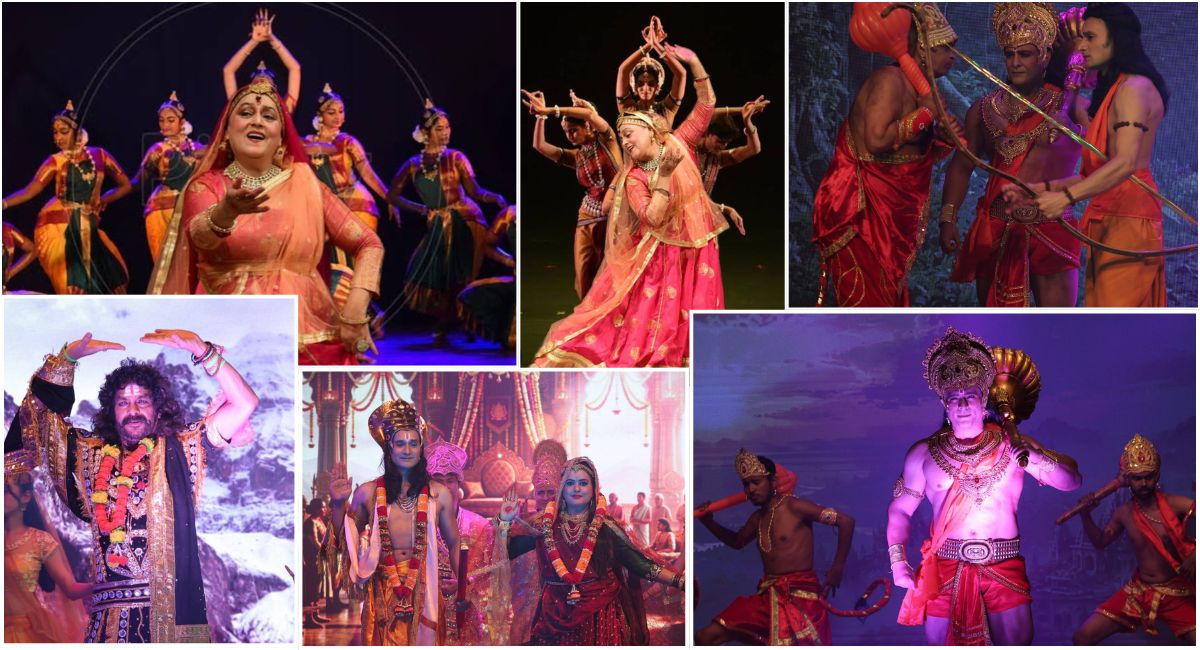
Kathak exponent and choreographer Jayanti Mala Mishra recently presented her artistry in Ramayan Nritya Natika, a production by Mahaan Nrityangana Sitara Devi Gurukul, Kala Kriti Kendra and Sangeeta Tiwari Trust. Blending classical dance, music, and theatre, the production traced Lord Ram’s journey from childhood to the establishment of Ram Rajya and featured nearly 40 artistes.
Senior artist Rajesh Mishra wrote and directed the production, which featured Arun Mandola as Ram, Sangeeta Tiwari as Sita, Ajay Mahendra as Lakshman, Nirbhay Wadhwa as Hanuman, and Rajesh Mishra as Ravan. Mishra also handled the choreography and music arrangement, performing as a court dancer in Ravan’s court and as an Apsara.
In this interview, she discusses bringing the epic to the stage, Kathak's storytelling potential, and the importance of preserving its classical foundations.
What inspired you to be part of Ramayan Nritya Natika?
The Ramayana is not merely a story but a living tradition whose values continue to inspire generations. I felt Kathak could communicate its timeless message through dance, music and theatre. We aimed to go beyond familiar episodes and create an experience that emotionally connected audiences with the characters.
What were the challenges of choreography and music arrangement?
The biggest challenge was presenting a vast epic within a limited duration. We selected episodes that advanced the narrative while retaining its emotional and spiritual essence. Every scene required a distinct approach to movement and expression. The music also had to complement the drama, balancing grandeur with sensitivity and devotional depth.
How did you approach contrasting episodes such as Shabri’s devotion and Lanka Dahan?
Indian classical dance can move effortlessly between devotion, pathos, courage and the triumph of dharma. Shabri’s Navadha Bhakti demands emotional sensitivity, while Lanka Dahan requires energy and intensity. Similarly, Bali and Sugreev’s conflict differs greatly from Hanuman’s devotion to Ram. The choreography, expressions, rhythm and music must serve the emotion rather than overpower it.
You also performed as a court dancer and an Apsara. What was special about these roles?
Choreographing an entire production requires attention to the performers and the overall narrative. Performing on stage offers a different experience. The court dancer required grace and sophistication, while the Apsara demanded a celestial quality. Even a brief appearance should contribute meaningfully to the atmosphere of the story.
What does Kathak offer a production based on the Ramayana?
Kathak has a rich storytelling tradition. Through abhinaya, tatkar, chakkars, hastaks and rhythmic compositions, dancers can communicate narrative and emotion. The Ramayana offers an expansive canvas, encompassing childhood, devotion, exile, courage, conflict and the victory of righteousness.
How do you see Kathak evolving today?
Kathak has tremendous potential to reach new audiences through experimentation and collaboration. However, innovation must not compromise its grammar and discipline. Dancers should understand its technique, rhythm, aesthetics and history before reinterpreting the form. Contemporary stagecraft and technology can enrich performances, but Kathak’s classical identity must remain intact.
What do you hope audiences take away from the production?
I hope audiences experience the Ramayana as an emotional and cultural journey, recognising the universal values of compassion, sacrifice, devotion, courage and dharma. The audience’s response was deeply gratifying. Our responsibility is to preserve tradition while presenting it meaningfully to contemporary audiences. This production was a humble attempt to let dance, music and theatre bring Ram’s timeless story alive once again.

Follow Us
Related Posts