Om Puri: The unconventional face that conquered Indian Cinema
- Sakshat Belchada
- 18 Oct, 2026
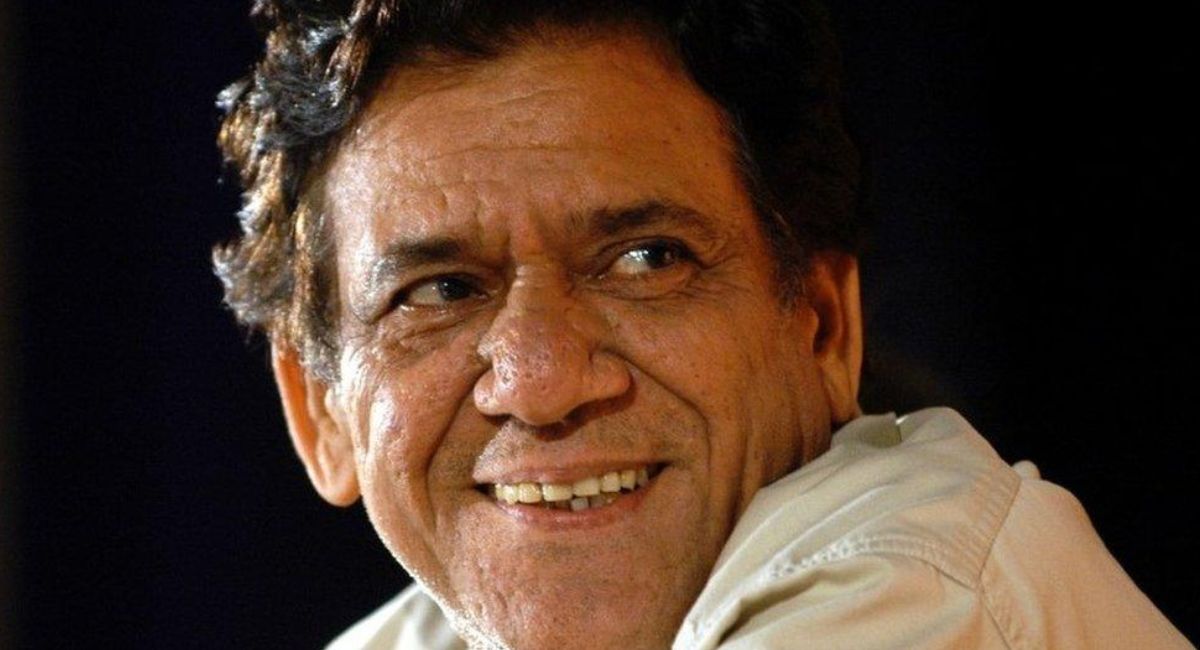
Some actors are born with the looks of a leading man. Others possess something far more enduring: The ability to make audiences forget what a hero is supposed to look like. Om Puri belonged to the latter category, turning a face once dismissed by critics into one of the most unforgettable identities in Indian cinema.
Born on October 18, 1950, into a financially struggling Punjabi family, Puri’s early life was marked by hardship. His father, a former army man who later worked with the Railways, reportedly faced imprisonment over allegations of cement theft. As a child, Om experienced poverty, taking up odd jobs and collecting coal from railway tracks to help his family survive. Life offered him little comfort, but it quietly nurtured a remarkable resilience.
His journey into acting was anything but smooth. Despite graduating from the prestigious National School of Drama (NSD), Puri reportedly faced rejection at the Film and Television Institute of India because of his unconventional appearance. He was told, in effect, that he did not fit the mould of a hero, villain or comedian. Even during his theatre days, he encountered discouragement from people who questioned his ambitions.
Thankfully, cinema eventually learned to look beyond appearances.
Puri made his mark with films such as Ghashiram Kotwal (1976), before delivering extraordinary performances in Govind Nihalani and Shyam Benegal’s socially conscious cinema. In Aakrosh (1980), he conveyed immense anguish largely through silence and expression. His defining performance in Ardh Satya (1983), as a troubled and fiercely determined police officer, established him as one of the finest actors of his generation.
Yet, Om Puri was never content to remain within the boundaries of serious cinema. He moved effortlessly between art-house classics and popular entertainers, appearing in films such as Hera Pheri, Chup Chup Ke and Malamaal Weekly. His performances in Mirch Masala, Maachis and Maqbool further demonstrated his extraordinary range.
His talent also crossed international borders. From Gandhi (1982) to City of Joy (1992) and Wolf (1994), Puri earned recognition beyond India. In 2004, he was awarded an honorary OBE (Officer of the Order of the British Empire) for his services to British cinema.
Om Puri passed away on January 6, 2017, aged 66, leaving behind a legacy that refuses to fade.
He proved that an actor’s greatness lies not in conventional good looks but in honesty, depth, and the ability to inhabit another human being. On his birth anniversary, the best tribute is to revisit his remarkable performances. For me, Arohan (1982) remains a fitting choice.
Happy birthday, Om Puri Sahab. Your face told stories that words never could, and your art still speaks to us.