NMMC chief presents textile recycling model at a national conference in New Delhi
- Newsband
- 26 Jun, 2026
New Delhi: The Navi Mumbai Municipal Corporation (NMMC) Commissioner, Dr Kailas Shinde, delivered an impactful presentation on the civic body’s Textile Recycling Centre (TRF) at the National Summit on “Textiles for Global Markets” held in New Delhi.
Addressing the special session on “Quality, Sustainability, Certification and Procurement Decisions: Establishing India as a Preferred Global Procurement Hub,” Dr Shinde presented the pilot model of NMMC’s TRF under the theme “Municipality–State Collaboration Framework.” The presentation highlighted how urban local bodies can play a key role in strengthening India’s circular textile economy.
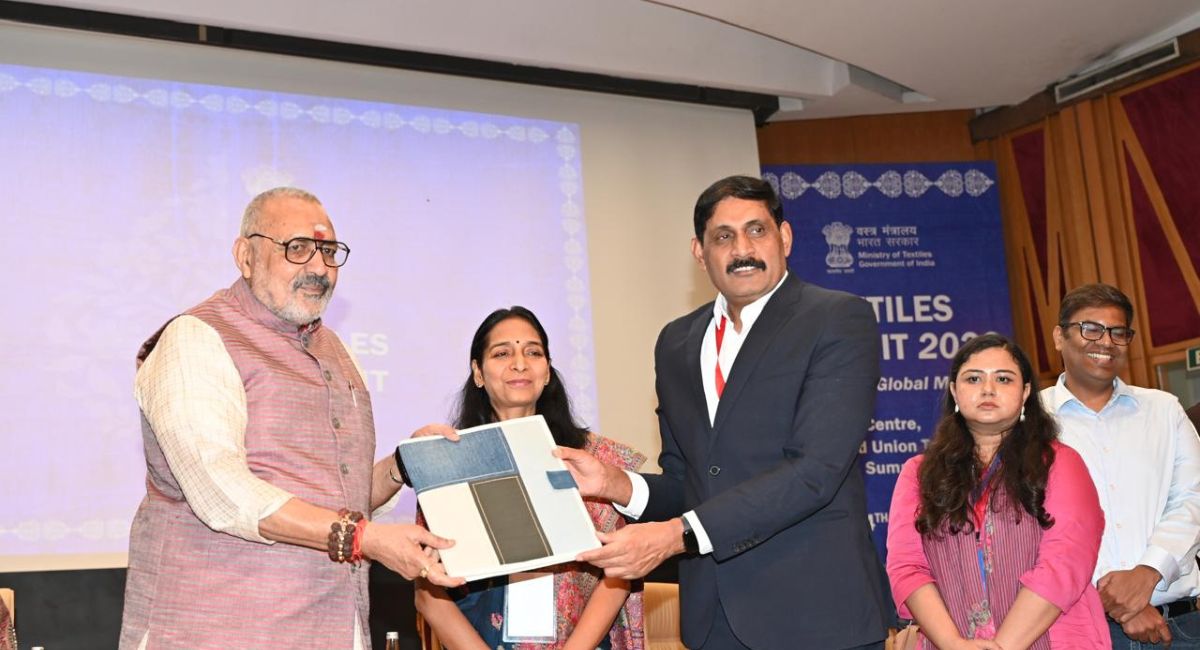
The conference was attended by Secretary of the Textile Committee Karthikeya Dhanda, Prof. Bipin Kumar of IIT Delhi, former CEO of the National Accreditation Board Dr Anil Johri, TEA Vice Chairman V. Elangovan, IKEA Director Sayantani Chatterjee, and other dignitaries. Union Textile Minister Giriraj Singh felicitated Dr Shinde for his presentation.
Dr Shinde emphasised that urban local bodies can emerge as key collectors of raw material in the textile recycling value chain, supported by existing infrastructure such as citizen service centres, waste collection networks, and 3R facilities. He noted that cities are well-positioned to ensure a steady supply of segregated textile waste for recycling industries.
The NMMC’s TRF, implemented in collaboration with the Ministry of Textiles, has emerged as a successful model, benefiting over 50,000 households. The initiative has also trained more than 300 women in producing value-added products from textile waste, creating sustainable livelihood opportunities through self-help groups while significantly reducing landfill waste.
Dr Shinde further highlighted that the project has established a structured textile collection and recovery system, strengthened supply chains, and enabled large-scale stakeholder engagement with the recycling industry. He also underlined opportunities under the Maharashtra Textile Policy 2023–2028 to scale up such sustainability-driven initiatives.
He called for a collaborative public-private partnership model involving local bodies, the state government, industry players, technology providers, self-help groups, and citizens. He added that the NMMC TRF model could serve as a benchmark for other cities and deserves wider replication at the state and national levels.
The TRF initiative is being recognised as a pioneering project in textile waste recycling, further strengthening Navi Mumbai’s identity as an environmentally progressive city.

Follow Us
Related Posts